
MEAT & POULTRY PROCESSING
Turn Trimmings into Premium Cuts.
Build Texture Without Phosphates.
Transglutaminase bonds muscle proteins into a strong, natural network — restructuring meat pieces into uniform high-value portions, firming up sausages and hams, and simplifying your ingredient list.
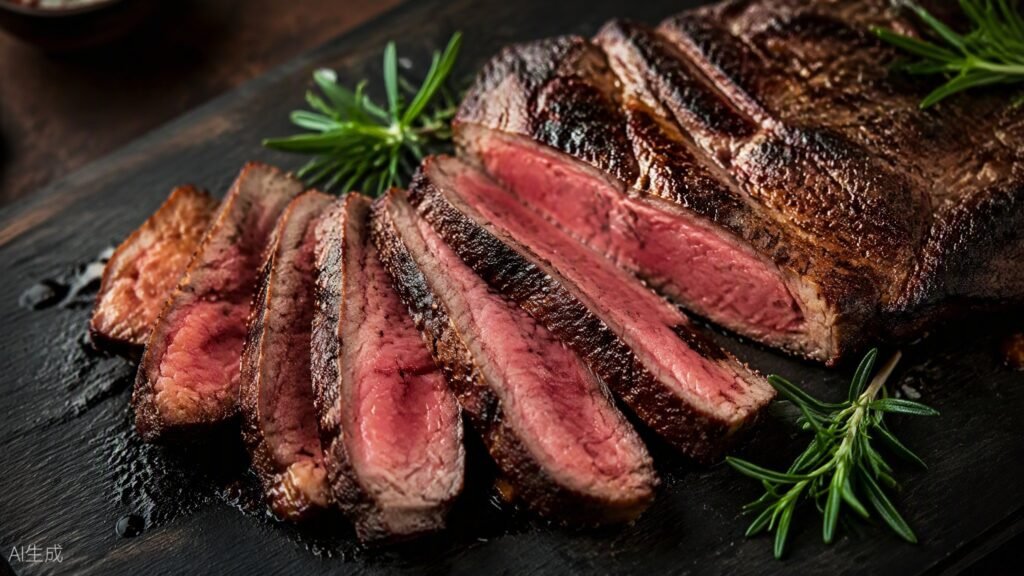
Restructured & Reformed Meat
Typical Products: Reformed beef steaks, portion-controlled filets, beef tongue slices, restructured bacon, kebab and döner cones, chicken and turkey portions, and formed roasts.
Upgrade Low-Value Cuts: Topside, round, chuck, brisket, blade, silverside, and trimmings become standardized premium portions.
Strong Cold Bonds: Binds at refrigeration temperature (6–8 °C) and stays intact through freezing, thawing, slicing, grilling, and frying.
Reference Process — Reformed Beef Steak:
Thaw frozen beef at 4 °C for 24 h; trim and cut as needed.
Mix meat pieces with ~1% TG binding blend (tumble ~4 min for full contact; use 2.0%–2.5% for high-strength blocks).
Form into molds or casings to target steak shape and vacuum degas.
React at 6–8 °C for 2–3 hours (or overnight for maximum strength).
Blast-freeze at -20 °C or below, semi-thaw to -2…0 °C, and slice into 20 mm steaks.
Sausages, Hams & Injected Products
Emulsified & Fermented Sausages:
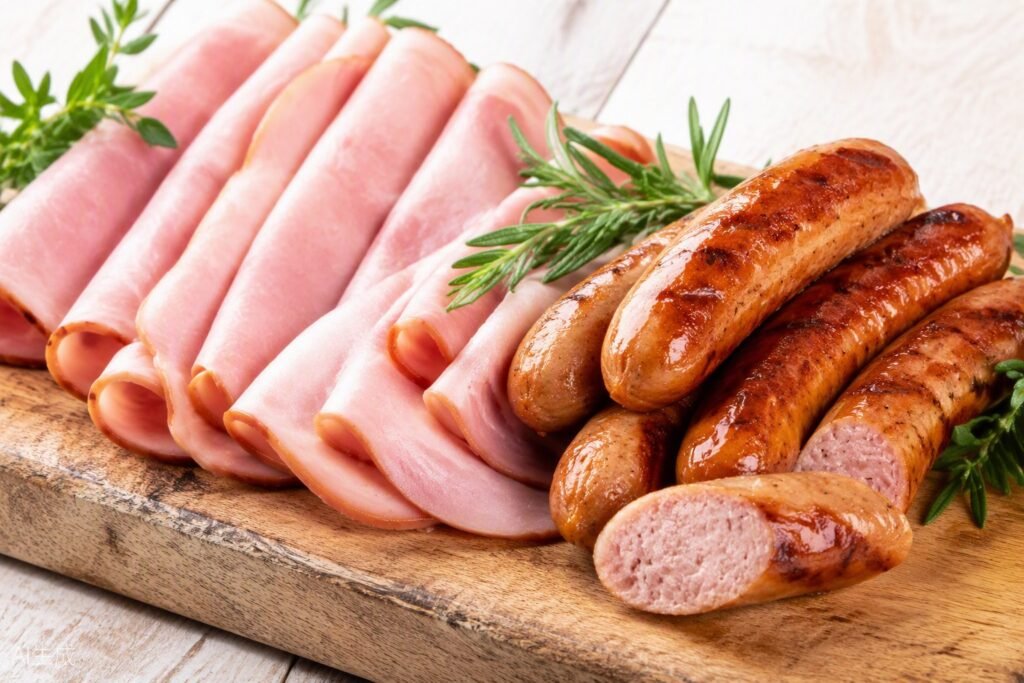
Delivers the famous “snap” (Knack effect) in frankfurters, bologna, cooked, smoked, and canned sausages, even after pasteurization.
Dosage: 6 – 15 g/kg direct powder addition, or rehydrate 10 g TG in 30–60 ml cold water (<5 °C) per kg meat; chill minimum 2 h to overnight.
Ham, Bacon & Injected Products:
Bonds internal parts of deboned hams and reconstructed pork bellies into solid logs, dramatically reducing high-speed slicing losses.
Brine Injection: Add TG directly into injection brines as the final ingredient from 0.05%.
Is restructured meat with TG safe and accepted?
Yes. TG has GRAS status in the U.S. and is approved across the Americas, Asia, and Europe, where it is treated as a processing aid. It has been used commercially in meat products for over 20 years.
Will consumers notice the bond?
No. The cross-link forms between protein molecules — the restructured product looks, slices, and cooks like whole muscle.
Does TG work with poultry and pork as well as beef?
Yes – chicken, turkey, pork, lamb, and mixed meats all respond well. Around 12% protein minimum is recommended in emulsified systems; any protein works — muscle, collagen, milk, or vegetable.
Can I use TG in a marinade or injection line?
Yes. Use 5–30% marinade extension as long as the meat absorbs it to a tacky consistency; add the TG preparation last, after the meat has taken up as much marinade as possible.
Topside, round, chuck, brisket, blade, silverside, and trimmings become standardized premium portions without trimming waste.
Binds completely at chilled temperature (6–8 °C); finished cuts remain intact through high-speed slicing, freezing, thawing, and grilling.