
PRODUCT TECHNICAL OVERVIEW • EC 2.3.2.13 | CAS 80146-85-6
The Natural Enzyme That Builds Better Food Texture
Transglutaminase (TG) cross-links proteins at the molecular level — improving texture, binding, yield and sliceability across meat, seafood and dairy applications, with a clean label.
1. What Is Transglutaminase?
Transglutaminase (TG, EC 2.3.2.13) is a naturally occurring enzyme that forms covalent bonds between protein molecules — linking the glutamine and lysine residues that exist in almost every food protein. The result is a stable protein network that transforms the texture, structure and water-holding capacity of protein-containing foods.
Often called “meat glue” by chefs, TG is far more than a binding agent. It is a versatile texture-engineering tool used worldwide in surimi and seafood, yogurt and cheese, sausages and hams, restructured meat, bakery and plant-based products. Our TG is produced by controlled microbial fermentation — using Streptomyces mobaraensis, a non-pathogenic, non-GMO microorganism.
2. How It Works (Mechanism of Action)
TG catalyzes an acyl-transfer reaction between Glutamine (acyl donor) and Lysine (acyl acceptor), linking them into isopeptide cross-links — among the strongest bonds in food chemistry:
- Heat-stable: Survives cooking, pasteurization, and retorting.
- Freeze-stable: Survives freezing and thawing cycles
- Digestion-normal: Digested like any ordinary dietary protein.
- Pure Catalyst: Leaves no technological residue in finished food and does not affect taste.
- Ideal Substrates: Muscle proteins (myosin), casein, whey protein, soy protein, wheat gluten, and gelatin.

Product Range & Analytical Specifications
Available Product Grades
| Product Type | Carrier / Composition | Typical Industrial Use |
|---|---|---|
| Standard TG Powder | Maltodextrin carrier, 50–130 U/g | Texture improvement in meat, dairy, surimi |
| TG on Lactose | Lactose carrier, 90–130 U/g | Dairy applications (yogurt, cheese) |
| TG Concentrate | 500 / 1000 / 1500 / 2000 U/g | Low-dosage industrial use, premixes |
| TG Binding Blend | TG + sodium caseinate / functional proteins | Meat and fish restructuring, cold binding |
Physical, Heavy Metals & Microbiological Specifications
| Parameter | Specification | Parameter | Specification |
|---|---|---|---|
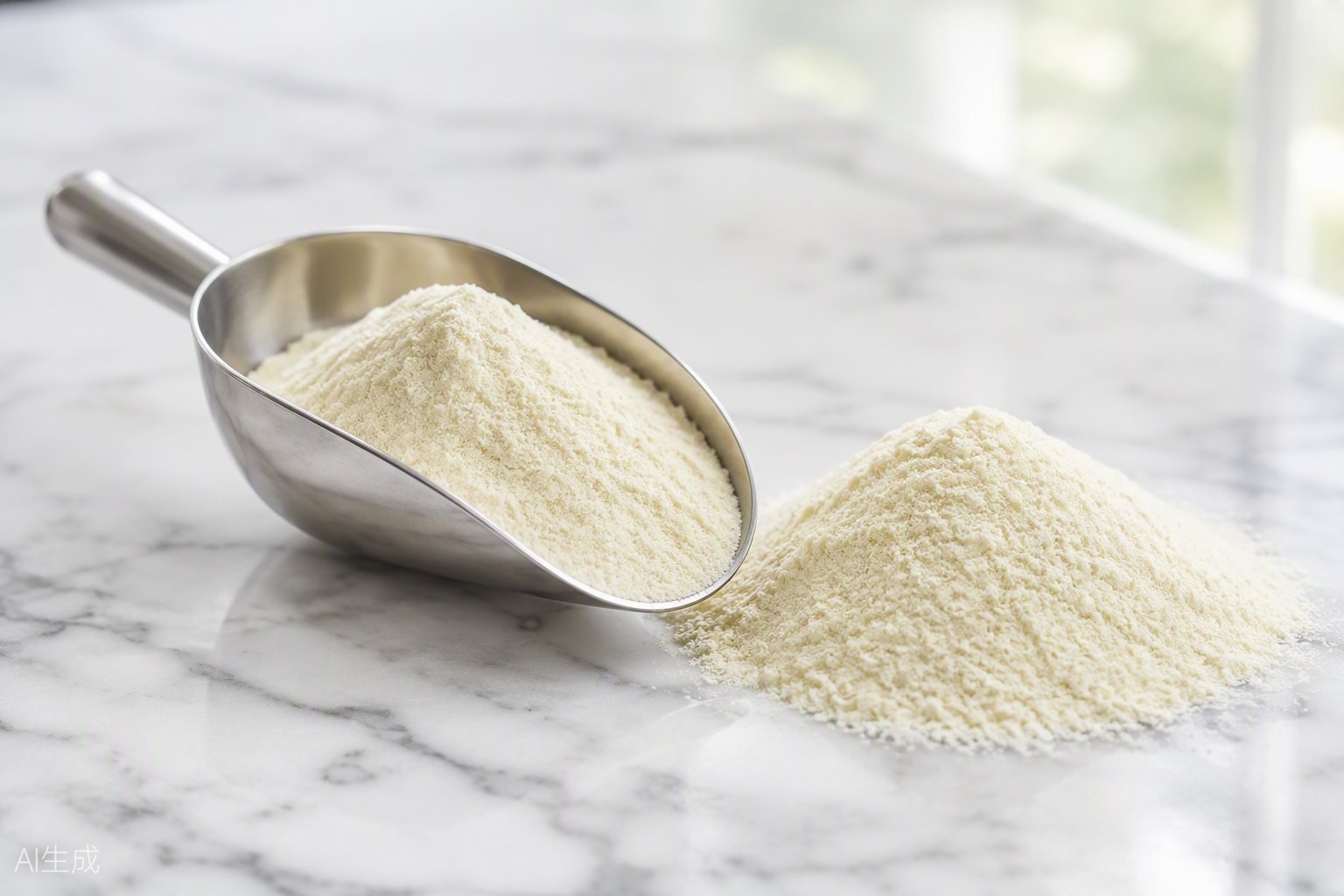
| Appearance | White to light-yellow powder | Lead (Pb) | ≤ 5 mg/kg |
| Moisture (LOD) | ≤ 10.0 % | Arsenic (As) | ≤ 3 mg/kg |
| Active pH Range | pH 4.0 – 9.0 (Optimum 6.0 – 7.0) | Total Plate Count | ≤ 10,000 CFU/g |
| Temperature Range | Active 5–55 °C (Inactivated >75 °C) | Coliforms / Salmonella | ≤ 30 CFU/g | Absent in 25 g |
Safety & Regulatory Compliance
Digestive Safety: Inactive at stomach acidic pH and fully degraded by pepsin like ordinary dietary protein.
United States: GRAS (Generally Recognized As Safe) status; authorized for meat, dairy, bakery, and fish products.
European Union: Processing aid under Regulation (EC) No 1332/2008; not required in the final-food ingredient list (Regulation (EU) No 1169/2011, Art. 20(b)).
Global Approvals: Permitted in Canada, Mexico, Brazil, Argentina, Japan, Korea, China, Thailand, Australia, and other markets.
Allergen & GMO Notice: Non-GMO microorganism. Maltodextrin grade is 100% allergen-free; lactose-carrier grade contains milk.
Packaging, Storage & Practical Handling
Standard Packaging: 1 kg sealed aluminum foil bag; 20 kg export carton; 25 kg fiber drum.
Storage Conditions: Store cool and dry at or below 21 °C; refrigerated or frozen storage gives optimum stability. Reseal tightly after opening.
Shelf Life: 12 months from manufacture in original unopened package.
Assay & Quality: Activity assayed by the hydroxamate method (GB/T 34795-2017) under HACCP principles. Batch COA supplied with every shipment.
Frequently Asked Questions - General TG
Does TG change the taste of food?
No. TG has no flavor of its own and does not affect the taste, color, or aroma of the final product.
Is TG an allergen or a GMO product?
No. It is produced by a non-GMO microorganism (Streptomyces mobaraensis) through fermentation. The maltodextrin carrier grade is completely allergen-free (note: the dairy lactose-carrier grade contains milk).
Does TG have to appear on the label?
In many countries TG is legally a processing aid, not a food additive, because it has no technological function in the finished food — so no labeling is required for most applications.
Can TG be used in vegetarian or plant-based products?
Yes. TG cross-links soy, pea, wheat, and other plant proteins and is widely used in plant-based meat alternatives.