
DAIRY & CULTURED PRODUCTS
More Cheese from Every Liter.
Creamier Yogurt with Fewer Additives.
Transglutaminase cross-links milk proteins (casein and whey) into a stronger network — raising fresh cheese yield by +15–20%, locking in moisture, and giving yogurt a naturally rich texture without extra milk solids or stabilizers.
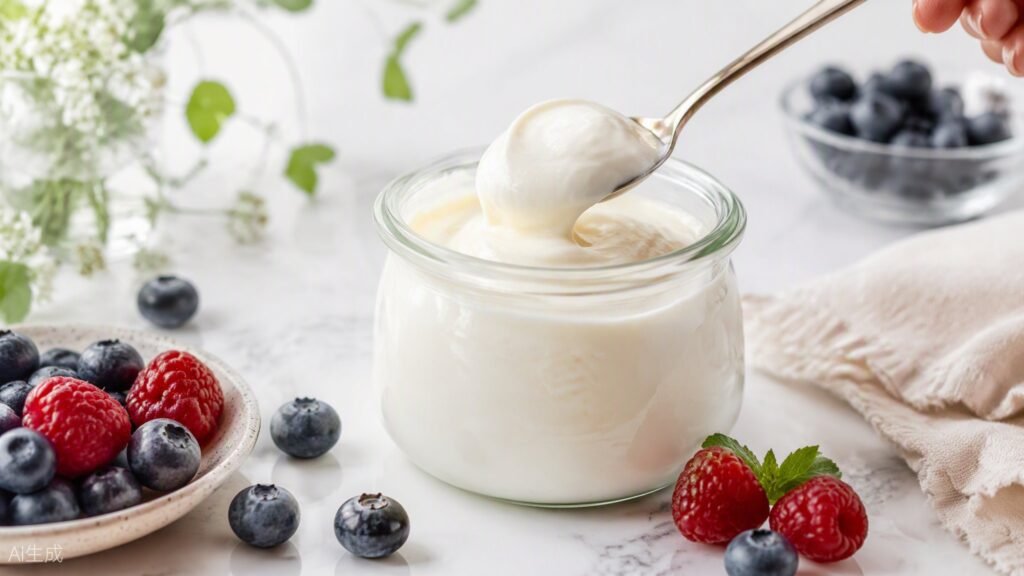
Yogurt Applications (Set, Stirred, Drinking & Greek)
Reduced Syneresis: Less whey separation on the surface and longer attractive shelf life.
Creamier Low-Fat Products: Restores the body and mouthfeel that fat reduction takes away without adding fat.
Recipe Savings & Clean Label: Reduce skim milk powder (SMP), milk protein concentrates (MPC/WPC), gums, and gelatin.
Goat & Camel Milk: Dramatically improves gel strength and viscosity in milks that naturally form weak gels.
Direction for Use: Add to milk before fermentation or together with starter cultures at 0.02% – 0.07% (approx. 0.02–0.3 g/L).
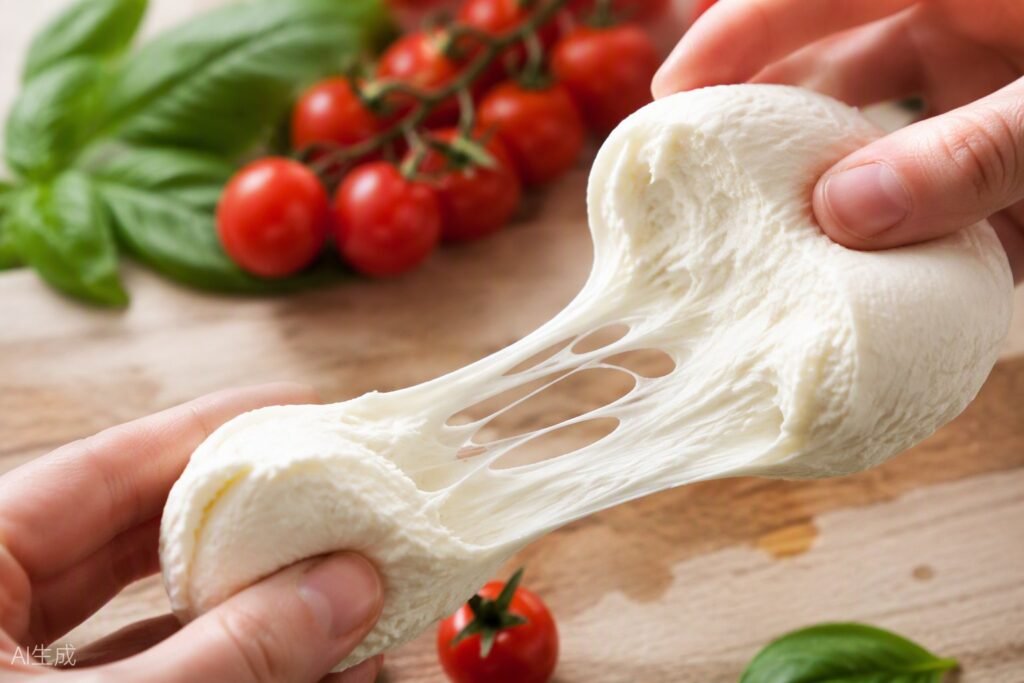
Cheese Applications (Mozzarella, Feta, Cottage & Quark)
Only about 38% of the world’s protein-rich whey is effectively processed. TG captures whey proteins directly into the curd network, keeping that value in your product instead of the drain:
+15% to 20% Higher Yield in fresh cheese, cottage cheese, quark, and white brined cheese.
Superior Stretch & Melt in low-fat and full-fat mozzarella.
Rennet Cheese Protocol:
- Add rennet at 5 °C and hold 30 min
- Add TG (0.02% full-fat / 0.05% low-fat) and hold 2 hours at 5 °C
- Raise to 40 °C for coagulation. (Do not add TG before chymosin; keep reaction under 2 hours).
Dairy FAQ
Will TG slow down my starter culture?
Ans:Only at high concentrations. Within the recommended dosage window (0.02%–0.07%), fermentation proceeds normally; run a small batch trial to confirm acidification time and flavor.
Can TG replace all stabilizers in yogurt?
Ans: In many recipes it can replace part or all of the gums and gelatin and a significant share of added milk solids. The exact replacement level depends on your milk base and target texture.
Which cheeses respond best?
Ans: High-moisture and traditionally low-yield cheeses gain the most: mozzarella, feta, cottage, cream cheese, quark, and fresh cheeses.
Which cheeses respond best?
Residual activity can continue to cross-link proteins during storage and gradually increase hardness. Inactivate the enzyme with the normal heat treatment of your process, and keep the reaction time under control.